


No Power = No Mission
In modern operations, the most disruptive failure isn't always the loss of generation capacity — it's the loss of clean, stable power to the systems that monitor, control, and communicate across the microgrid.
Microgrids are designed to improve resilience by combining localized generation, energy storage, and power management infrastructure.
They can support remote facilities, islanded sites, industrial operations, medical facilities, data centers, telecommunications hubs, and other locations where reliable power is essential.
But a microgrid is only as dependable as the control and monitoring systems that keep it operating.
Computers, networks, communications equipment, switchgear controls, sensors, and instrumentation all require uninterrupted, conditioned power.
When these systems are exposed to voltage sags, transients, noisy lines, frequency variation, or extended outages, operators can lose the visibility and control needed to keep critical loads online.
The Microgrid Power Quality Challenge
Microgrids can operate connected to the utility grid or independently in island mode.
In either configuration, sensitive control and monitoring equipment may still be exposed to power quality disturbances.
Voltage sags, induced transients, voltage peaks, frequency variations, noisy lines, and outages can disrupt communications, damage electronics, or affect the accuracy of information used to manage the system.
The challenge is especially important in remote and harsh environments.
Oil and gas facilities, industrial sites, medical facilities, data centers, and isolated communities may depend on microgrids for primary or backup power.
These same environments can expose power protection equipment to temperature extremes, dust, humidity, vibration, and other conditions that can shorten the service life of conventional equipment.
Why UPS Protection Matters Inside the Microgrid
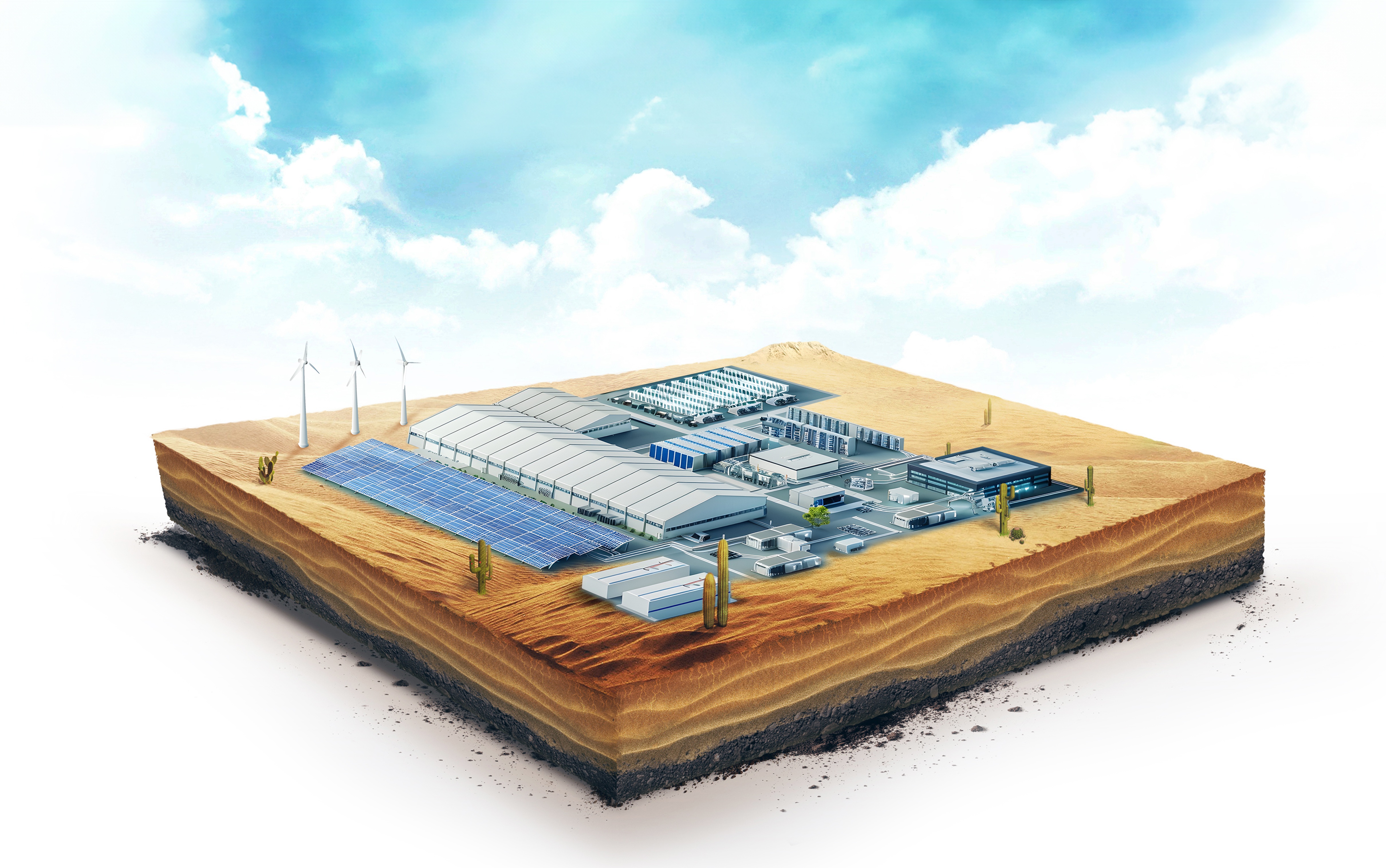
A UPS in a microgrid does more than keep equipment powered during an outage.
It helps maintain power quality for the systems that coordinate the microgrid itself.
In some installations, the UPS may support a small protected load directly. In larger installations, the UPS often supports the systems that control power to the load and monitor the condition of the load.
This distinction is important. The main load in a microgrid can be large, but the control and communications equipment that manages that load may require a smaller, highly reliable protected power path.
Keeping that infrastructure online helps maintain system visibility while backup generation starts, storage systems respond, or controlled shutdown procedures are completed.
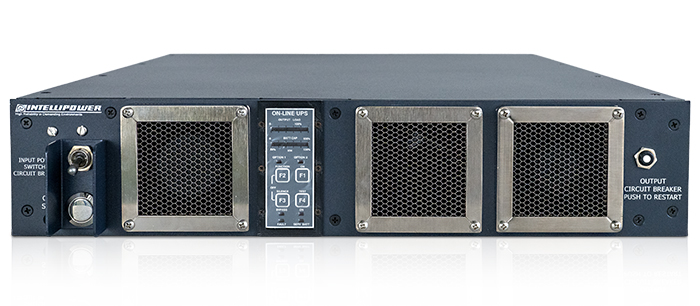
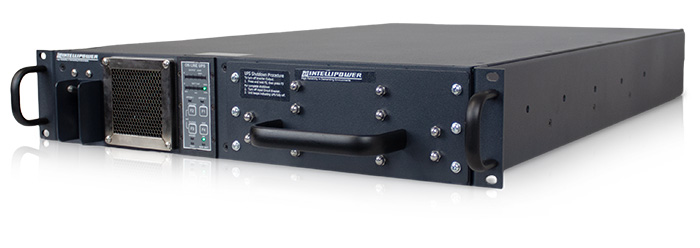
For these applications, the 3 kW IntelliShield configuration can be positioned around compact critical-load protection where space and load size are limited but uptime remains essential.
With the UPS serving as the power path, protected loads avoid transfer delays when primary power is interrupted.
Harsh Environments Require Rugged Design

Many microgrid deployments are outside the controlled conditions of a standard equipment room.
Remote oil and gas locations may combine heat, dust, vibration, and limited maintenance access. Offshore installations add salt atmosphere and continuous mechanical stress.
Industrial facilities and remote communities can introduce wide temperature ranges and challenging operating conditions.
In these applications, UPS design must address both electrical performance and environmental durability.
The UPS must provide clean output power while continuing to function in the same demanding environment as the equipment it protects.
Rugged design, wide operating temperature capability, vibration tolerance, shock resistance, and compatibility with varied input power sources become practical design considerations rather than optional features.
Matching UPS Capacity to Critical Loads
Selecting the right UPS begins with the protected load.
Smaller microgrid support systems may need protection for communications hardware, sensors, compact control panels, remote monitoring systems, or edge computing equipment.
Online double-conversion UPS topology is well suited to this role because it continuously conditions incoming power and delivers stable output power to connected equipment.
Larger microgrid installations may require protection for broader control and monitoring architectures.
These systems can include switchgear controls, communications networks, instrumentation, computers, and sensors that coordinate power delivery and system status.
For these applications, the 5 kW IntelliShield configuration provides additional capacity and a path for scalable system design.
The practical message is straightforward: the 3 kW unit supports smaller protected-load profiles.
The 5 kW unit supports larger microgrid control, monitoring, and communications systems where capacity, redundancy, or future expansion may be required.
Application Fit at a Glance
| Selection factor | 3 kW IntelliShield | 5 kVA IntelliShield |
|---|---|---|
| Protected load | Communications hardware, sensors, compact control panels, remote monitoring, and smaller networked systems. | Switchgear controls, instrumentation, communications networks, computers, sensors, and larger monitoring systems. |
| Microgrid role | Localized critical-load protection for smaller support systems. | Higher-capacity protection for larger control and monitoring infrastructure. |
| Design emphasis | Compact protection where load size is limited but continuity is important. | Scalable protection where capacity, redundancy, and runtime planning are more central to the design. |
Scalability for Growing Microgrid Requirements
Microgrid requirements often evolve as additional monitoring equipment, communications systems, control devices, and load management infrastructure are added.
A modular UPS architecture allows power protection capacity to expand without replacing the entire system.
For larger installations, N+1 scalability supports both capacity growth and redundancy.
Multiple UPS units can be combined to increase available power while maintaining protection for critical loads.
This approach is useful where microgrid control and communications systems must remain available during maintenance events or fault conditions.
Remote Monitoring and Power System Visibility
Remote and distributed microgrid sites benefit from UPS monitoring capability because operators may not have immediate physical access to installed equipment.
An integrated network management interface allows UPS status to be communicated to remote monitoring locations so teams can maintain awareness of power protection conditions.
For microgrid operators, this visibility supports the same objective as the UPS itself: keeping critical systems available and observable when power conditions change.
Reliable monitoring helps teams understand the status of the protected power path and supports more informed operational decisions during disturbances.
Ensuring Microgrid Control System Resilience
Microgrids improve resilience by localizing generation, storage, and power management, but the control and monitoring systems inside the microgrid still require clean, uninterrupted power.
If those systems lose power quality or availability, the larger microgrid can lose visibility and control at the moment reliable operation matters most.
A rugged UPS provides the stability needed to protect sensitive electronics, bridge power transitions, and support controlled operation in harsh environments.
By matching UPS capacity to the protected load, microgrid designers can use 3 kW systems for smaller critical electronics and 5 kVA systems for larger control and monitoring architectures.
The result is a more resilient power protection strategy for the systems that keep microgrids operational.
Learn more, download the complete White Paper: Select the Right UPS to Protect Critical Loads in Challenging Environments